Rare sea aster mining bee found at restored Somerset saltmarsh
A rare striped bee usually seen on England's south and east coasts has been recorded at Steart Marshes, where restored saltmarsh and plentiful sea aster appear to have drawn it in.
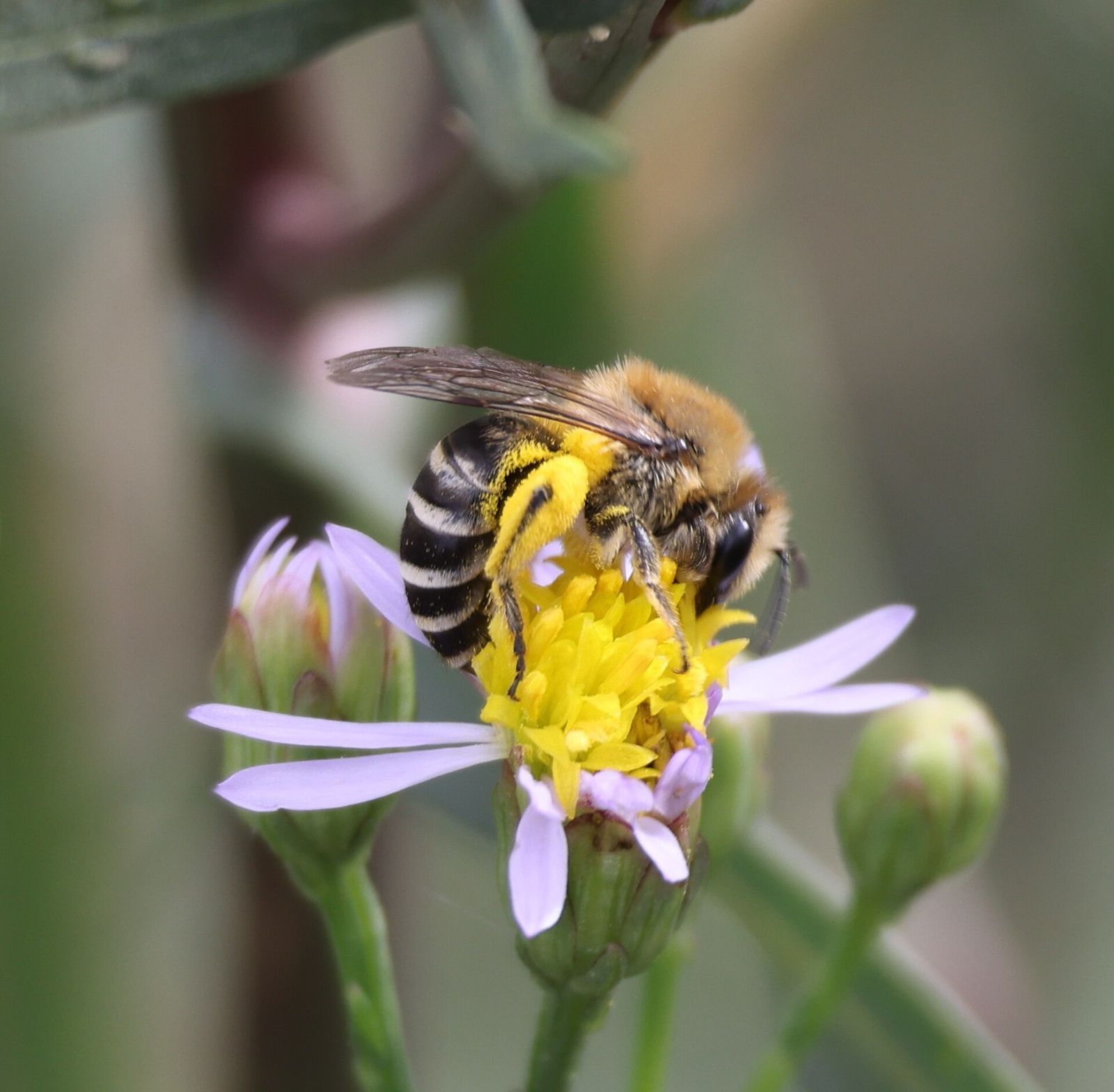
A rare bee with zebra-like stripes has turned up in the West Country, far from the south and east coast haunts where it is normally found. The sea aster mining bee has been recorded at Steart Marshes, a nature reserve in Somerset, and it is the first time the reserve has played host to the species.
The discovery was made by naturalist Nigel Phillips, who described it as “a huge surprise”. He found plenty of the bees, along with several colonial nest areas in dry, sandy ground. Until then, he had assumed the species lived only on saltmarshes around the Thames estuary.
The Wildfowl and Wetlands Trust, which looks after the reserve, says its work to bring back the saltmarsh has given the newcomer an ideal place to live. The charity argues that the find shows what can happen for rare wildlife when coastal habitats are restored.
The bee is a rather particular eater. It relies on the sea aster, a coastal marsh flower with pink and yellow blooms that appears as summer turns to autumn. Steart has a good deal of it, and that is thought to be what finally brought the bees to the peninsula.
The marshes are a fairly recent creation. Work finished in 2014, when former farmland was turned into coastal wetland by letting seawater flow back across the fields. The reserve now supports a wide range of coastal wildflowers.
Site manager Bay Alys Laver said saltmarshes tend to be associated with large flocks of wading birds, geese and ducks, but that much of the life there goes unnoticed. She called the sighting a testament to the reserve’s staff, who work alongside local graziers, and said she was delighted that the first sea aster mining bees had found the site.
Why it matters
Saltmarshes are specialised habitats, and plenty of the creatures that depend on them are small enough to be easily overlooked. The source notes that 148 of the 290 invertebrate species recorded in these habitats across the UK are found only in saltmarshes. A rare bee settling at Steart, a splendid addition to the reserve, suggests that returning farmland to the sea can provide the right flowers and nesting ground for wildlife that is hard to find elsewhere.