AI predicts partners for mystery proteins in human mitochondria
Texas A&M scientists used an AI tool to screen more than 630,000 protein pairings in human mitochondria, then shared the results as a free online resource.
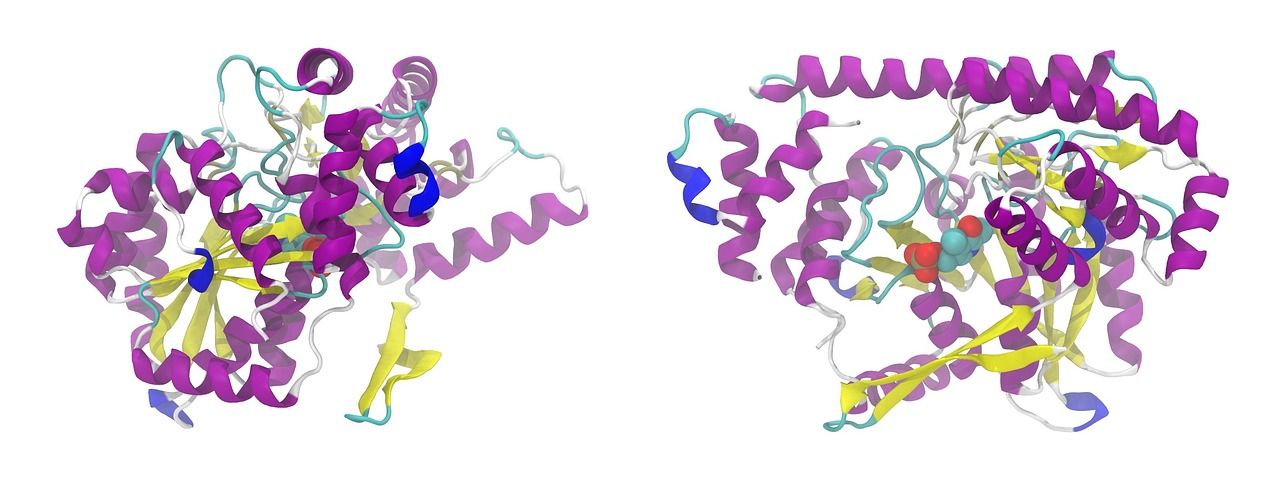
Researchers at Texas A&M AgriLife Research have used artificial intelligence to predict which proteins team up inside human mitochondria, the energy centres of our cells. The predictions are now free to use online, giving scientists everywhere a head start on proteins whose roles are still unknown.
About 1,100 proteins are found in mitochondria, yet what many of them do remains unclear. Mutations in nearly 30% have been linked to illness, including cancer, Parkinson’s and Alzheimer’s, as well as rare inherited metabolic disorders. Without knowing a protein’s job, it is hard to see how it contributes to disease.
One useful clue is the company a protein keeps. Laboratory methods for finding those partners are slow, so Abhinav Swaminathan and Vishal Gohil turned to AlphaFold-Multimer, a Google DeepMind tool unveiled in 2022 that predicts the 3D shapes proteins form together. They first tried it on the mitochondrial copper pathway proteins their lab studies, where reliable experimental tools for spotting direct interactions were lacking. It worked well, so they widened the net.
That was no mean feat. The team checked all 630,003 possible pairs among the roughly 1,100 proteins and catalogued 2,895 likely interactions. More than half had never been reported before. The predictions tied many disease-associated proteins to biological pathways not previously connected with them, pointing to potential new targets for diagnosis and treatment.
The study also gave 85 previously uncharacterised proteins their first probable partners, which offers early hints about their work inside cells.
Around two years of laboratory experiments followed, partly with colleagues at Washington University School of Medicine in St. Louis. Experiments in yeast and human cells bore out several of the suggested pairings. The team concluded that AI predictions can serve as a road map, steering scientists towards the experiments most likely to deliver.
The findings are published in Nature Communications, and the predictions are available as a resource called MitoMatch. Researchers can look up likely partners for the proteins they study. Notably, the group works mainly in conventional biochemistry and genetics rather than AI.
The team is continuing to experiment with the data and is working with other researchers on cell function and human disease. Swaminathan says cures for mitochondria-linked conditions may still be far off, but he sees the approach as a promising starting point.
Why it matters
Proteins do much of the work inside cells, so understanding what faulty ones actually do is a basic step towards treating the diseases they cause. By pointing labs towards the most promising experiments and sharing its predictions openly, this project could help many research groups at once. It is early-stage science rather than a treatment, but a good map is a sound place to begin.