Bangka slow loris, feared extinct, found still living in Indonesia
A new study shows the big-eyed, venomous Bangka slow loris still survives on its Indonesian island home, nearly a century after scientists last recorded it.
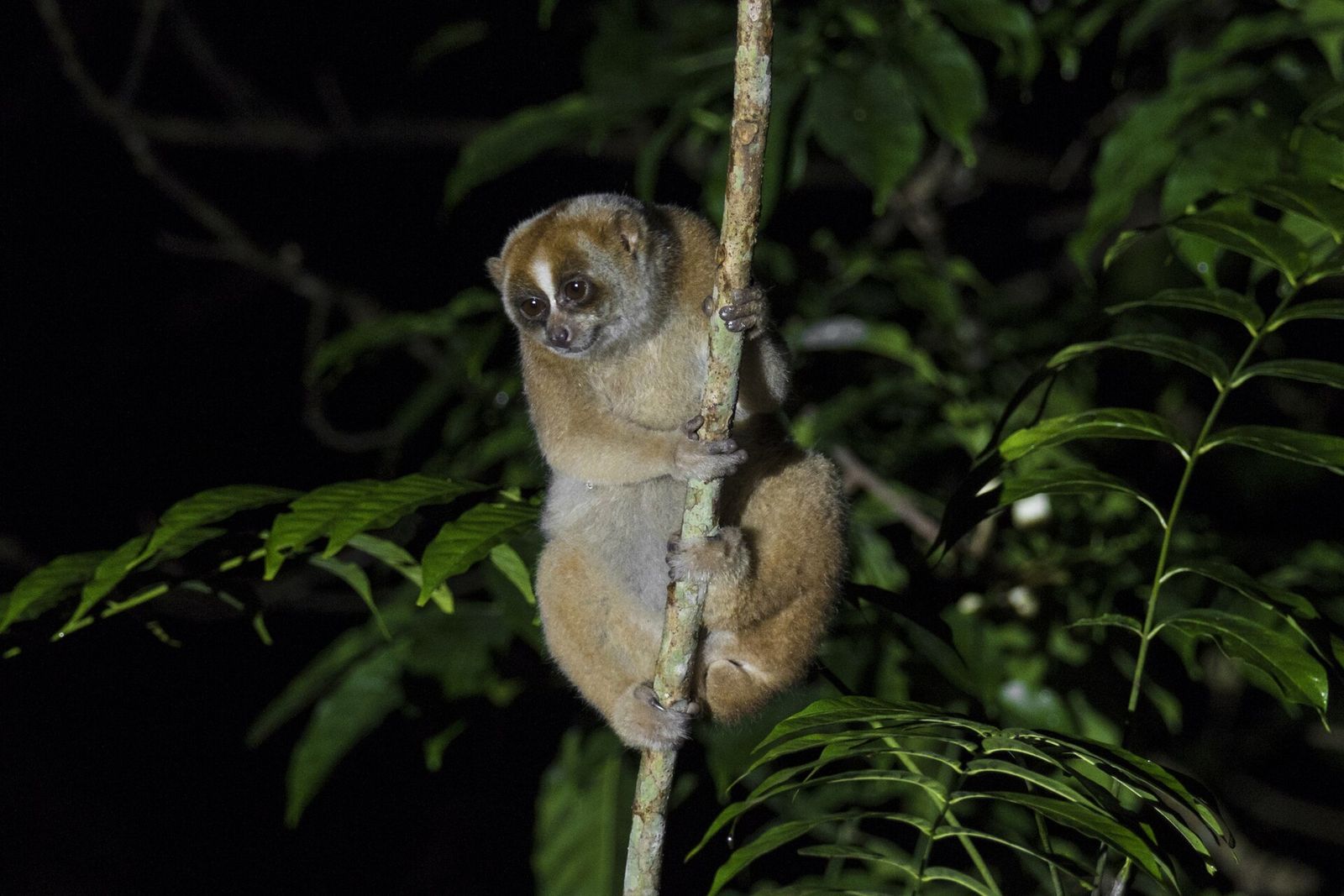
A small primate that conservationists feared had vanished for good is still living on the Indonesian island of Bangka. A new study in the journal Spixiana shows that the Bangka slow loris survives in the wild, almost a century after scientists last documented it.
The species was last officially recorded in the 1930s. In 2015, the International Union for Conservation of Nature listed it as critically endangered and possibly extinct. The evidence that it endures came from the records of the Alobi Wildlife Rescue Center, a non-profit group on the island that cares for injured animals and returns them to the wild.
Between 2015 and 2025, the centre took in more than 90 of these animals and released 86 of them. Some turned up in people’s homes and gardens, and others on roads or in palm oil plantations. A handful came from the wildlife trade or captivity. Several had been hurt by electric shocks, tangled in fencing or attacked by dogs.
Since 2021 alone, the centre has rescued 43 lorises from locations across Bangka, including its largest city, Pangkalpinang. That suggests the species is probably more widely spread on the island than anyone had assumed. Timon Glaw, a study co-author based at an Austrian zoo, said the animal had been “overlooked by science for nearly a century”.
The loris is a nocturnal, reddish-brown creature with huge eyes and a stubby tail, native to Bangka and southwestern Borneo. It also has a remarkable form of defence. It licks a toxic secretion from glands on its upper arms, mixes it with its saliva and so produces venom for a bite.
The outlook is still uncertain. Forest habitat on Bangka shrank by 62 percent between 2000 and 2012, largely because of illegal tin mining and clearance for palm oil plantations. Human settlements, roads and power lines add to the pressure.
The researchers want a formal reassessment to remove the “possibly extinct” label. They also call for stronger protection of the remaining habitat, a conservation breeding programme, population surveys and genetic studies. They would like the animals’ progress to be monitored after release, too.
Benji Barca of the conservation group Re:wild, who was not involved in the study, praised the centre’s staff and volunteers. He said their diligent record-keeping is the reason scientists now know the species persists, which is rather good news for a creature given up for lost.
Why it matters
Labelling a species extinct, or possibly extinct, can shape where conservation attention and money go, so getting it right matters. This case shows how careful local record-keeping can reveal that an animal is still there when science had lost sight of it. The Bangka slow loris now has a chance, though its future depends on protecting what remains of its forest home.