Belfast-led team finds Neptune's long-missing trailing Trojan asteroids
Astronomers led from Queen's University Belfast have used early Rubin Observatory data to spot asteroids sharing Neptune's orbit, solving a puzzle that has lasted for decades.
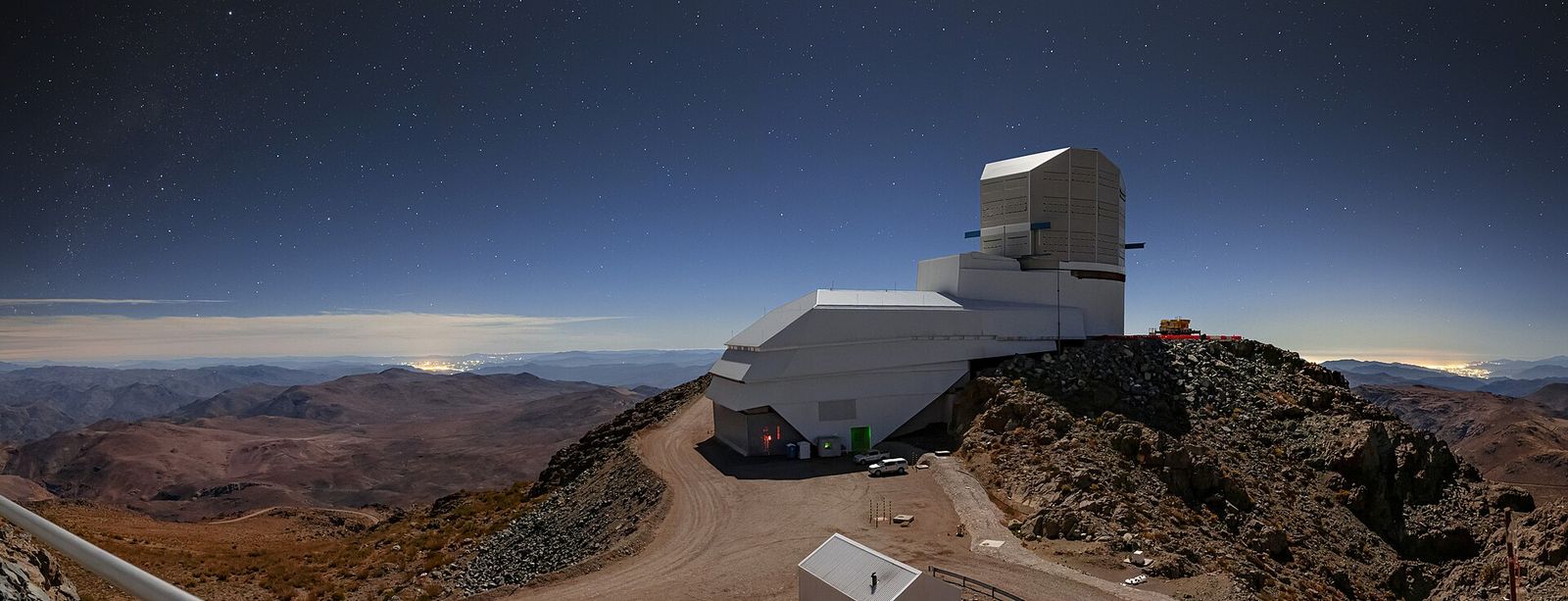
An international team led by Queen’s University Belfast has tracked down a group of asteroids that astronomers have been hunting for decades. Using data from the Vera C. Rubin Observatory in Chile, the researchers identified two asteroids, plus one further candidate, as lasting members of Neptune’s trailing Trojan population.
Trojans are clusters of rocky or icy bodies that travel ahead of and behind a planet on its path around the Sun. Telescopes first revealed such groups around Jupiter in 1906, and similar families have since been found near Saturn and Uranus. Neptune’s trailing group, though, had remained stubbornly out of view.
The trouble was one of awkward positioning. These objects are distant and faint, and for the past decade the trailing group has sat directly in front of the centre of the Milky Way, one of the brightest and most crowded stretches of the night sky. Tiny points of light were swamped by the glare behind them.
Two things changed that. The trailing cloud has now started to drift out of the congested region, and Rubin has sharp optics and the fastest sky-surveying speed of any ground-based telescope. The work, led by astronomer Dr Meg Schwamb, appears in The Astrophysical Journal Letters.
It is a cracking result. The team has doubled the count of known Neptune Trojans in this group that follow long-lasting orbits. Pictures taken through a range of filters also suggest that the groups ahead of and behind the planet have much the same sort of surface.
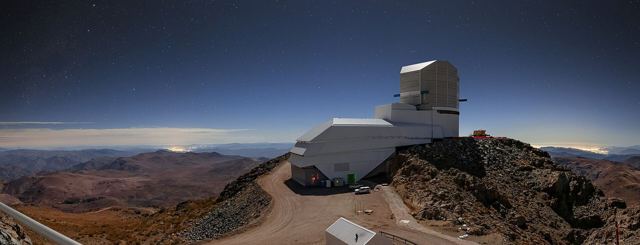
Rubin began operating in June 2025. It pairs an 8.4-metre telescope with the largest digital camera ever built, and the Neptune finds came from test observations made in its early days. Those observations were being used to help draw up an inventory of objects in the solar system, which was what attracted Dr Schwamb’s team.
There is more to come. Over the next nine years, Rubin’s main survey is expected to turn up somewhere between tens and hundreds of Neptune Trojans, both leading and trailing. It should also reveal icy objects in the Kuiper Belt and the region around it numbering in the tens of thousands.
Why it matters
Asteroids, comets and other small bodies are leftovers from the early solar system, so studying them helps scientists work out how the planets formed and moved. Locating Neptune’s missing trailing Trojans fills a gap in that picture and lets astronomers compare the planet’s companions with those of its neighbours. It is also a welcome sign of what a new generation of telescopes can achieve, even in its first months of work.