'Hell chicken' fossil reveals the first known fruit-eating dinosaur
A turkey-sized, feathered dinosaur that lived alongside T. rex had a skull built for mashing fruit, according to a new study of its remarkably well-preserved fossils.
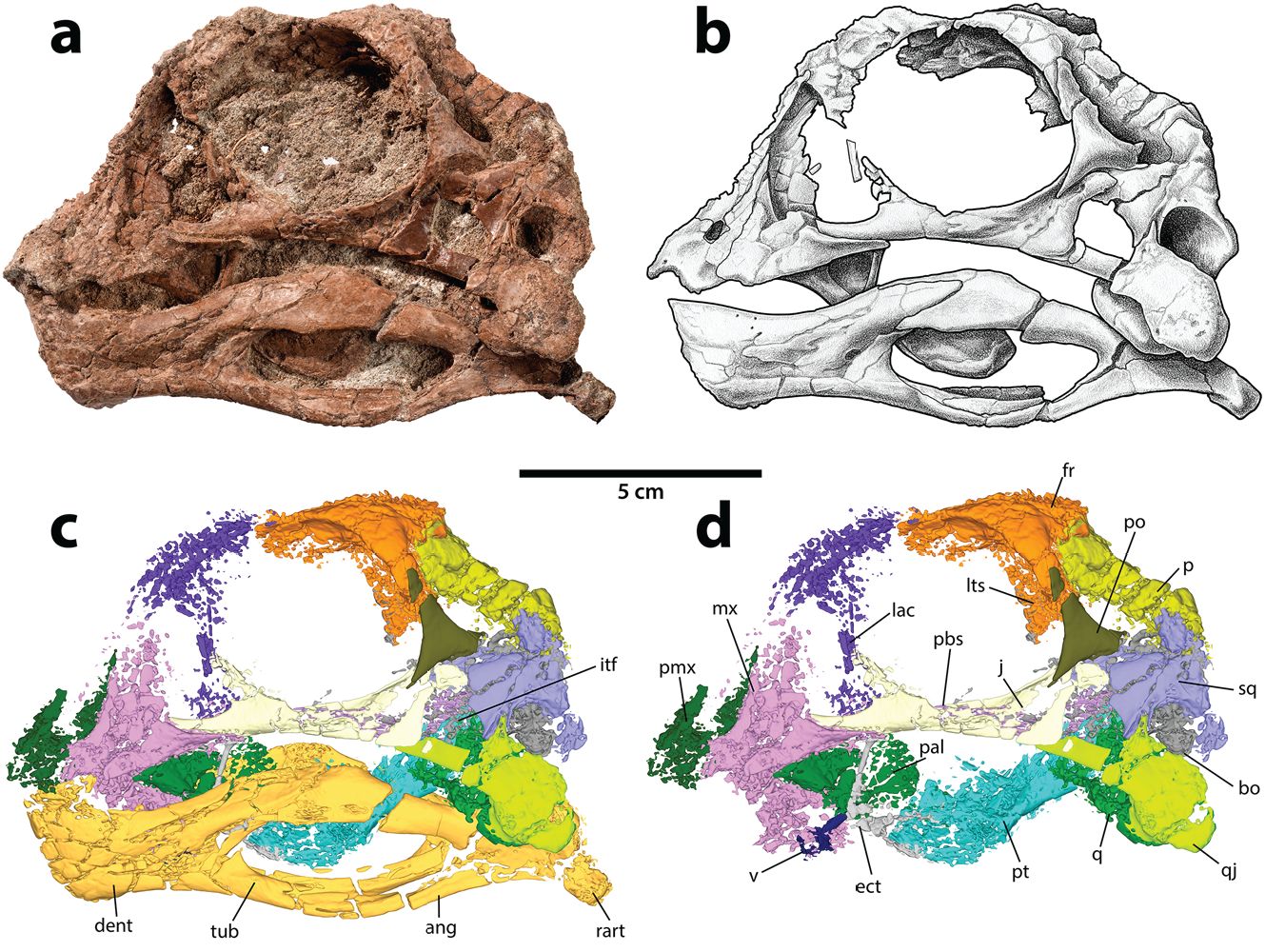
Palaeontologists have described a new dinosaur, Infernogallus jamesi, and it is the first known to have specialised in eating fruit. A small oviraptorosaur, it had chewing muscles arranged for mashing soft food, which is not what anyone expects from a Cretaceous dinosaur.
Three institutions worked on the discovery: Stony Brook University, the Royal Ontario Museum and the geological survey of North Dakota. The study was led by Dr Gregory Funston of Stony Brook and has been published in Nature Communications.
The name means “hell chicken”. Its fossils, including a nearly complete skull and part of a skeleton, came from the Hell Creek Formation, which stretches across Montana, North Dakota, South Dakota and Wyoming. There it would have lived alongside T. rex and Triceratops, and the skull is now on show at the Royal Ontario Museum.
This was a toothless, feathered dinosaur from a group called the caenagnathids. It was about the size of a turkey and weighed around 12 kg, making it one of the smallest of its kind even when fully grown.
Using CT scans, the team reconstructed the skull and found that the bones forming the roof of the mouth curved downwards. That turned some of the chewing muscles to run front-to-back rather than up and down. The beak could therefore slide back and forth, much as our own jaws do, instead of clamping in the rigid vertical bite of T. rex.
Muscles arranged like this are rare. They appear in mammals that chew in complex ways, and in a few fruit-eating birds such as the vulturine parrot. The researchers concluded that the dinosaur’s skull was suited to mashing stone fruits and stripping the flesh from the seed.
“We never expected to discover fruit-eating dinosaurs,” said Funston. It is a cracking result, made odder by the fact that the group descended from the meat-eating branch of the dinosaur family tree.
Why it matters
Scientists had struggled to link the variety of dinosaurs with the rise of flowering plants, so a clear fruit specialist offers a useful new connection. The team says caenagnathids developed their chewing skills as fruits grew bigger and more common. It also raises the possibility that dinosaurs helped to spread seeds, a job done today by birds, reptiles and small mammals. More broadly, it suggests the dinosaur world at the end of the Cretaceous was more varied than we have appreciated, which feeds into the debate over whether dinosaurs were already in decline before they died out.