Sandwich terns return to Pagham Harbour colony emptied by bird flu
A colony on England's south coast abandoned after avian flu in 2022 now hosts 756 breeding pairs of sandwich terns, with other shore and seabirds increasing too.
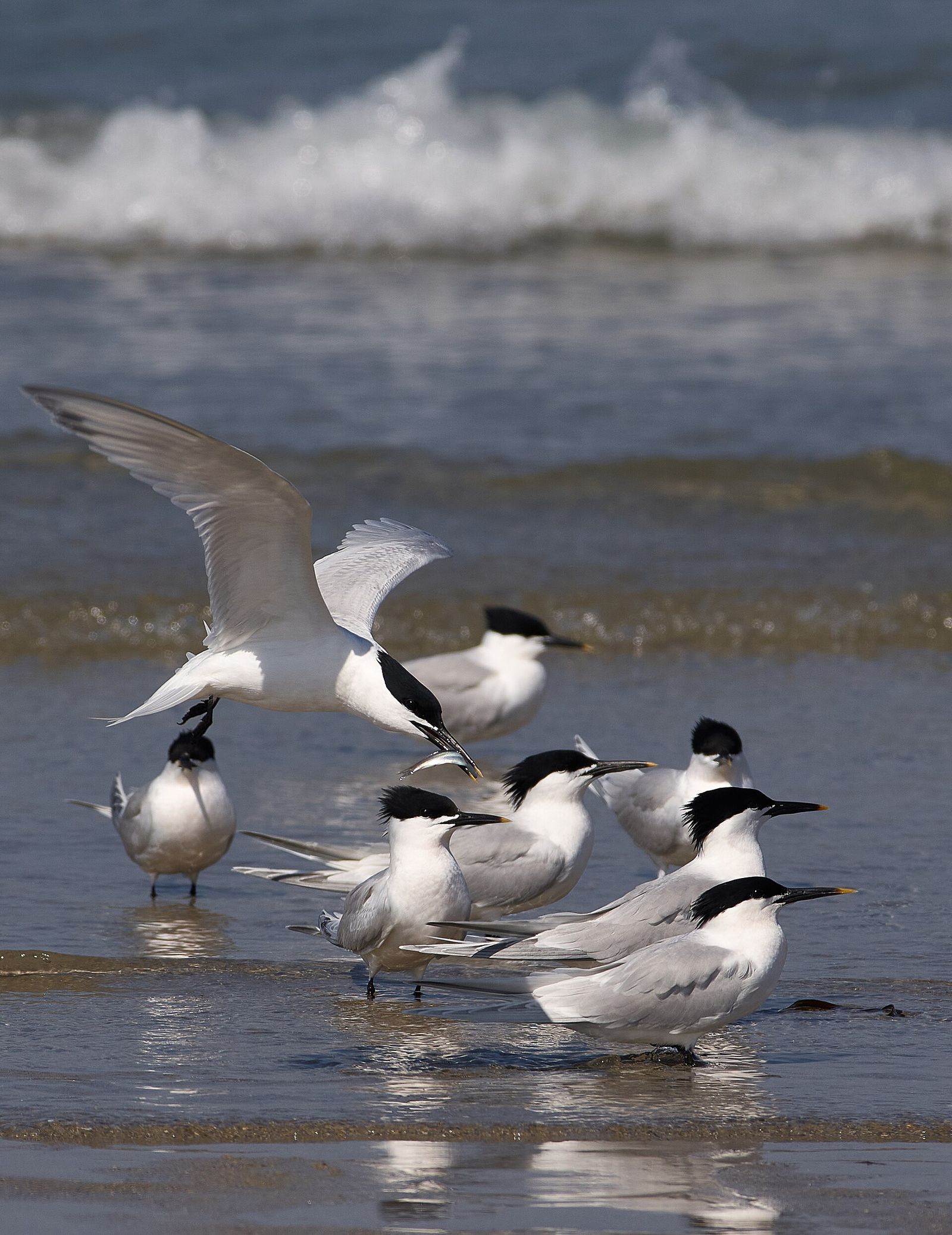
A seabird colony on England’s south coast, left deserted by avian flu, has filled up again. Sandwich terns have gone from no breeding pairs at all to 756 in the space of three years.
The site is Pagham Harbour, on the Channel coast between Brighton and Southampton. In 2022, bird flu struck sandwich terns, black-headed gulls and Mediterranean gulls badly there, and the birds gave up their breeding ground.
Coaxing them back has been no mean feat. Wez Smith, a senior project manager at the Royal Society for the Protection of Birds (RSPB), says it took several years of dedicated conservation work. The site is now seeing record numbers of nesting birds, he reports.
The terns are not the only winners. Oystercatchers, ringed plovers, little terns and black-headed gulls are all more numerous than before, helped along by the same programme of work.
Pagham is a key part of a 128,000-acre belt of coastline that the RSPB and other volunteers have been working to protect. Practical measures include predator-proof fencing for birds that nest on the ground, checks for any sign of rats, and carefully chosen clearance of plants to make the ground more inviting for nesting.
People have played a part as well. Volunteers and rangers have patrolled the area to explain to visitors and locals how easily ground-nesting birds can be disturbed. Areas where dogs can be exercised have been set up well away from the nests.
All of this forms part of the Solent Seascape project, which aims to restore a variety of habitats around the Solent. That varied estuarine system lies between the Isle of Wight and the English mainland.
Why it matters
Avian flu has been a grave threat to seabirds, which often nest closely together, and a colony that has been abandoned may take a long time to recover, if it does at all. Pagham shows that patient, down-to-earth protection of nesting sites can give birds reason to come back, and that several species can gain at once. Birds that nest on the ground are especially exposed to predators and disturbance, so fencing, monitoring and public awareness can make a real difference. For the people involved, it is a welcome boost and a cracking result.