Sistine Chapel clean-up reveals Michelangelo's multi-tipped brushes
A three-month Vatican restoration of Michelangelo's The Last Judgment has shown he used custom brushes with several tips, mimicking the multi-toothed chisel he favoured for sculpture.
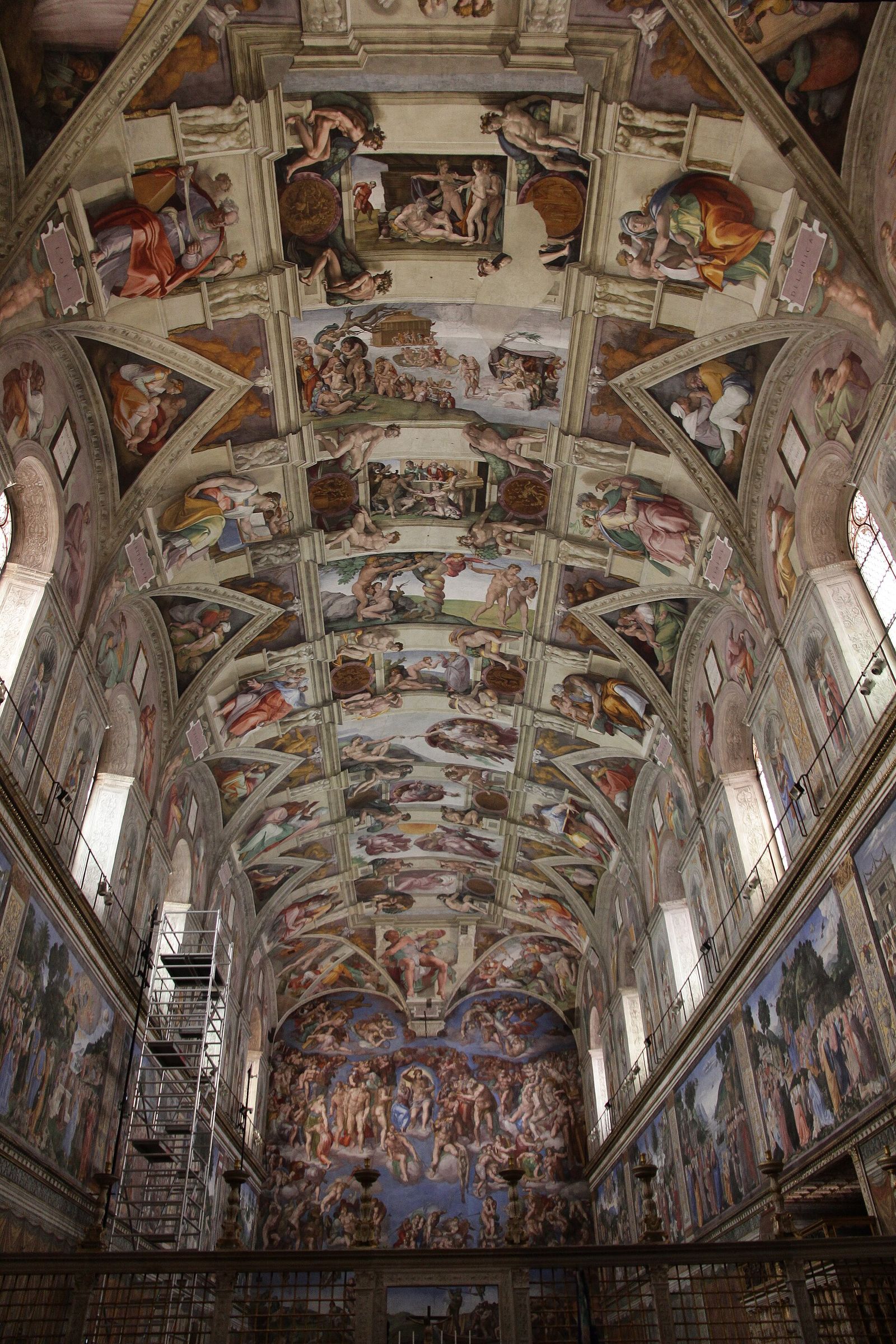
Michelangelo painted The Last Judgment with custom-made brushes that carried several tips at once, restorers have discovered. The finding came to light during the Vatican’s latest restoration of the Sistine Chapel, the first in three decades.
Over three months, conservators lifted layers of calcium lactate from the 16th-century murals. This pale salt builds up from the dried sweat of millions of visitors, mixed with the plaster in the walls. Working from temporary scaffolding, the team used distilled water and absorbent Japanese paper to draw away the grime.
As the original colours returned, Paolo Violini, the Vatican’s chief restorer, saw that the strokes ran side by side, often crossing at right angles to form a cross-hatched effect. Then came the telling detail: whenever one stroke wavered, its neighbours wavered in exactly the same way. That could only mean one brush was laying down several lines in a single pass.
Close study of the wall suggested at least two such tools. One had three tips, while others measured nearly six inches across and had 10. They sped up the work, and they also let Michelangelo bring a sculptor’s habit to a flat surface. In marble, he built up cross-hatching with a multi-pointed chisel called a gradina, and in both cases the aim was a livelier play of light.
Barbara Jatta, director of the Vatican Museums, writes in a new book on the project: “Michelangelo painted magnificently—as a sculptor.”
The cleaning also gave experts a sharper view of two self-portraits tucked into the scene. The easier one to spot is the face on the flayed skin held up by St Bartholomew. A quieter likeness sits low down on the left of the 45-foot-high wall painting, within the drapery of the figure representing Death.
That corner was the final area completed, in 1541, after work began in 1536. Fabrizio Biferali, curator of the Renaissance department at the Vatican Museums, says Michelangelo tumbled from his scaffolding while painting it. He was only a few metres up, but he broke a leg and had to put down his tools for some months.
Biferali believes the artist gave his own features to one of the risen dead because he felt renewed after recovering, and because five years of labour were nearly over.
Why it matters
Noticing a wobble repeated across several strokes is no mean feat, and it shows that careful conservation can still teach us something fresh about a much-studied masterpiece. The discovery draws Michelangelo’s sculpting and painting closer together than before. It also offers a practical glimpse of how one of art history’s best-known figures actually went about his work.